

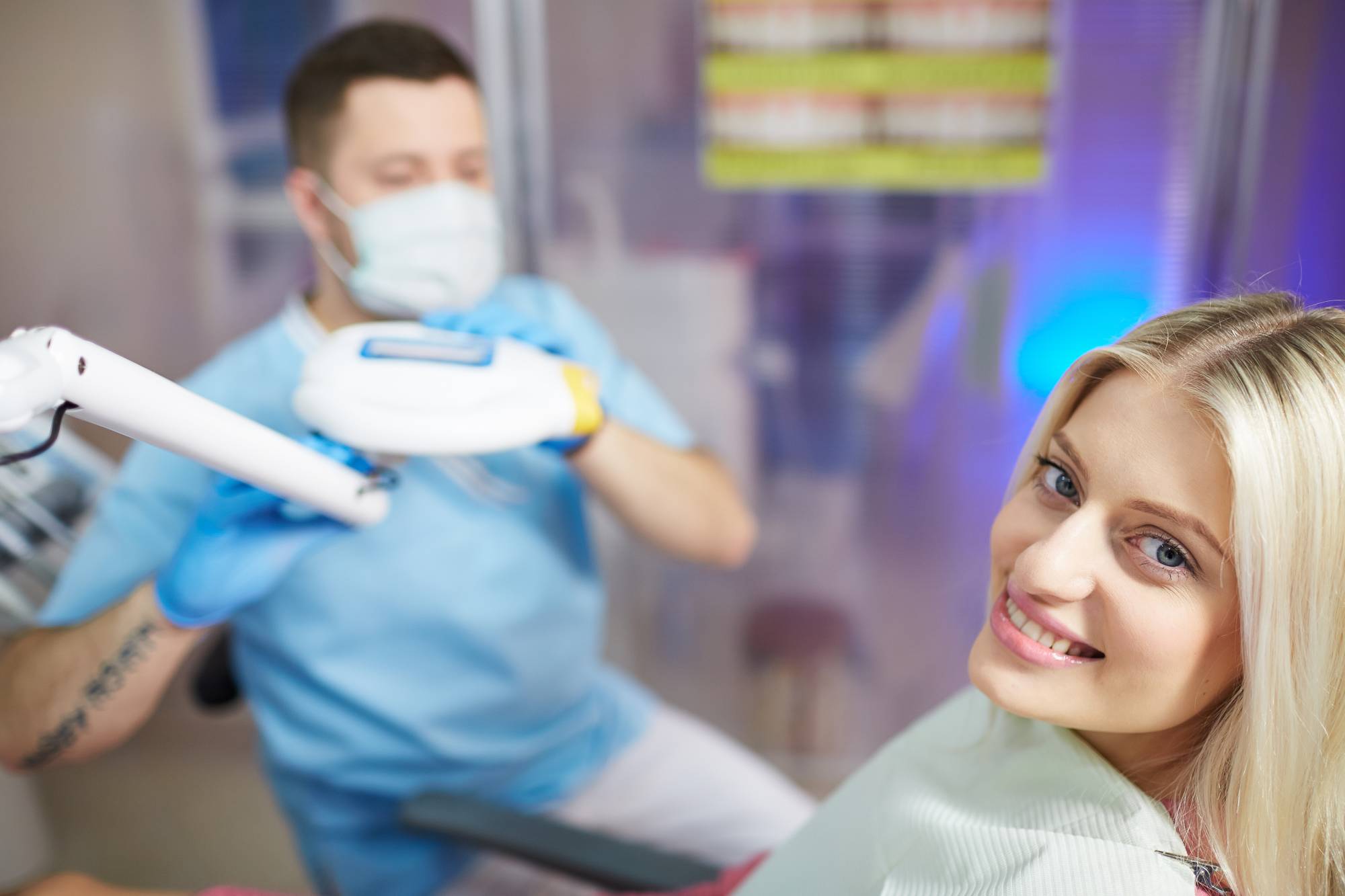
If stained or discolored teeth are affecting your smile, professional teeth whitening in Matthews can provide a more controlled way to brighten your teeth. However, is professional treatment worth the higher upfront cost compared with whitening strips, toothpaste, or LED kits?
Here is the honest answer: the best option depends on the cause of the staining, your oral health, desired level of whitening, budget, and tooth sensitivity.
This blog compares professional and over-the-counter whitening options across effectiveness, safety, cost, maintenance, and suitability to help you decide which approach may fit your needs.
What Are the Different Teeth Whitening Options?
Teeth whitening products generally fall into two categories, including treatments provided or supervised by a dentist and products purchased directly from a store or online.
- Professional in-office whitening: Uses dentist-controlled whitening agents and protective measures for a more concentrated treatment.
- Dentist-supervised take-home trays: Custom trays and professional whitening gel allow patients to whiten gradually at home.
- Whitening strips: Store-bought strips use a lower concentration of whitening ingredients and are designed for home use.
- Whitening toothpaste and rinses: These products primarily help remove surface stains through regular use.
- LED whitening kits: These combine whitening products with an LED device and are available without professional supervision.
The main differences include the concentration of the whitening agent, how closely the product fits your teeth, the expected results, and whether a dental professional monitors the process. For patients considering whitening as part of cosmetic dentistry, these factors can help determine which option is appropriate for their smile and oral health.
Professional Teeth Whitening vs. Over-the-Counter Products
Professional whitening offers faster, dentist-supervised results, while OTC products are more affordable and convenient. Here is how they compare:
| Factors | Professional Whitening | Over-the-Counter |
| Strength of agent | Higher, dentist-controlled | Lower |
| Speed of results | Generally faster | Typically gradual |
| Supervision | Dentist-monitored | Self-administered |
| Sensitivity management | Custom precautions | Limited |
| Cost | Higher upfront | Lower |
| Longevity of results | Typically longer-lasting | Shorter |
| Whitening agent | Dentist-selected whitening agents | Lower-strength whitening products |
Custom take-home trays can also provide a closer fit than generic trays or strips. A better fit helps distribute whitening gel more evenly across the teeth and reduces contact with the surrounding gums.
How Do Professional Whitening Treatments Work?
According to the CDC’s 2024 oral health data, 21% of U.S. adults ages 20 to 64 have at least one untreated cavity, highlighting why checking your oral health before whitening can be helpful.
Professional whitening typically begins with an evaluation of your teeth and gums. Your dentist can look for cavities, gum problems, damaged teeth, or existing restorations and determine whether whitening is appropriate before treatment begins.
The process may include:
- Oral examination: Your dentist checks your teeth and gums before treatment.
- Cleaning: Surface buildup may be removed so the whitening treatment can work more evenly.
- Gum protection: The gums and surrounding tissues are protected before the whitening gel is applied.
- Professional whitening gel: A dentist-controlled whitening agent is placed on the teeth according to the treatment plan.
- Optional light activation: Some systems may use a light as part of the whitening process.
- Take-home maintenance: Your dentist may provide custom trays for continued whitening or future touch-ups.
For patients who prefer a gradual process, dentist-provided take-home whitening can be a convenient alternative to in-office treatment. An examination before either option can also identify dental concerns that may need attention first.
What Are the Risks of OTC Teeth Whitening?
OTC products can cause problems when they are overused, applied incorrectly, or used when untreated dental problems are present. The most common OTC teeth whitening risks include:
- Tooth sensitivity: Using whitening products too frequently can make teeth temporarily sensitive.
- Gum irritation: Strips or generic trays that do not fit well may allow whitening ingredients to contact the gums.
- Uneven results: Teeth may whiten inconsistently when products do not fit evenly or staining differs from tooth to tooth.
- Enamel concerns: Highly abrasive products can wear the tooth surface when used excessively.
- Hidden dental problems: Whitening may draw attention away from cavities, gum disease, or other conditions that need treatment.
A dentist can also determine why whitening may not work for certain types of discoloration. This is especially relevant when stains are inside the tooth or when crowns, veneers, or fillings are present.
Which Is the Best Whitening Option for You?
There is no single answer for the best whitening options because the right treatment depends on your teeth, staining, sensitivity, and expectations. Here are a few general ways to compare your options:
- Choose professional whitening if you want faster, more noticeable results with professional supervision.
- Choose dentist-provided take-home trays if you prefer gradual, controlled whitening at home.
- Choose OTC products if you have mild surface staining and want a lower-cost option.
A consultation can help identify the source of discoloration and match the treatment to your needs rather than relying on a one-size-fits-all product.
Professional Whitening: Cost vs. Results
Professional teeth whitening in Matthews can vary in cost depending on the type of treatment, whether take-home trays or in-office whitening are used, and the patient’s individual needs.
When weighing whitening cost vs. results, the difference comes down to more than the price of the whitening product. Professional treatment uses dentist-selected whitening agents and customized methods designed to address your specific staining. In-office whitening can produce visible results in a shorter period, while custom take-home trays allow for gradual whitening with a closer fit than generic products.
OTC options may be suitable for mild surface stains, but results can vary based on the product, application, and type of discoloration. Maintaining those results may also require repeated purchases. For patients looking for more predictable whitening and a treatment plan suited to their teeth, the higher professional cost may provide greater value over time.
Who Is a Good Candidate for Teeth Whitening?
For people asking who is a candidate for teeth whitening, the answer generally includes people with healthy teeth and gums who have surface staining and no untreated dental problems.
Good candidates typically have:
- Healthy teeth and gums
- Extrinsic stains from coffee, tea, wine, or tobacco
- No untreated cavities
- No active gum disease
Whitening may be less suitable or require another cosmetic option for people with:
- Crowns, veneers, or fillings, which do not whiten like natural teeth
- Intrinsic discoloration caused by medication or trauma
- Significant tooth sensitivity
- Pregnancy, when whitening should be discussed with a dentist first
Can Teeth Whitening Remove All Types of Discoloration?
No. Whitening works well for many surface stains, but it does not remove every type of tooth discoloration.
- Extrinsic stains develop on the outer surface of the teeth and may result from coffee, tea, wine, tobacco, and certain foods. These stains generally respond well to whitening treatments.
- Intrinsic stains occur within the tooth and can be more difficult to change with conventional whitening. They may result from trauma, certain medications, or changes that occurred while the tooth was developing.
If whitening does not produce the desired results, cosmetic treatments such as veneers or bonding may be options. A dental evaluation can identify the type of discoloration and check for underlying concerns that may need treatment through general dentistry before cosmetic care is considered.
How to Maintain Your Whitening Results
Good habits can help maintain a brighter smile after either professional or OTC whitening. You may consider these practical steps:
- Limit staining foods and drinks: Reduce frequent exposure to coffee, tea, red wine, and other strongly pigmented foods.
- Rinse after beverages: Rinsing with water after coffee, tea, or wine can help remove residue.
- Avoid tobacco: Tobacco can contribute to tooth discoloration and affect overall oral health.
- Brush and floss daily: Regular hygiene helps control plaque and surface buildup.
- Keep regular dental cleanings: Professional cleanings can remove buildup that brushing cannot.
- Use touch-up trays as advised: If your dentist provides custom trays, follow the recommended maintenance schedule.
Final Thoughts: How Schein Dental Can Help Brighten Your Smile
Both professional and OTC whitening products can brighten teeth, but they are suited to different needs. Professional whitening offers stronger treatment, dental supervision, and more controlled results, while OTC products provide a convenient and lower-cost option for mild surface stains.
At Schein Dental, professional teeth whitening is part of a broader cosmetic dentistry approach focused on creating a healthy, natural-looking smile. Dr. Charles Schein evaluates each patient’s dental needs and discusses treatment options based on their goals, oral health, and existing restorations.
Professional whitening may include in-office treatment or dentist-provided take-home trays, depending on what fits your needs. An evaluation also gives you an opportunity to discuss sensitivity, existing dental work, and the type of discoloration affecting your smile.
If you are considering whitening, you can schedule an appointment with us to discuss your options and determine which treatment is appropriate for your smile.
Frequently Asked Questions
Is professional teeth whitening better than whitening strips?
Professional whitening is typically faster, more even, and longer-lasting because it uses stronger, dentist-supervised agents, while strips work gradually on mild surface stains.
How long does professional teeth whitening last?
Results vary based on diet, tobacco use, oral hygiene, and maintenance habits. Touch-up treatments may help extend the brightness of your smile, depending on your dentist’s recommendations.
Is over-the-counter whitening safe?
OTC products are generally safe when used as directed, but overuse or poorly fitting trays can cause sensitivity, gum irritation, or uneven results.
Who should not whiten their teeth?
People with untreated cavities, active gum disease, significant sensitivity, or existing crowns and veneers may need a dental evaluation first. Restorations such as crowns and veneers do not respond to whitening like natural teeth.
Does teeth whitening damage enamel?
Professionally applied whitening is designed to be safe for enamel when used appropriately. Temporary sensitivity is one of the more common side effects, and a dentist can recommend ways to manage it.