

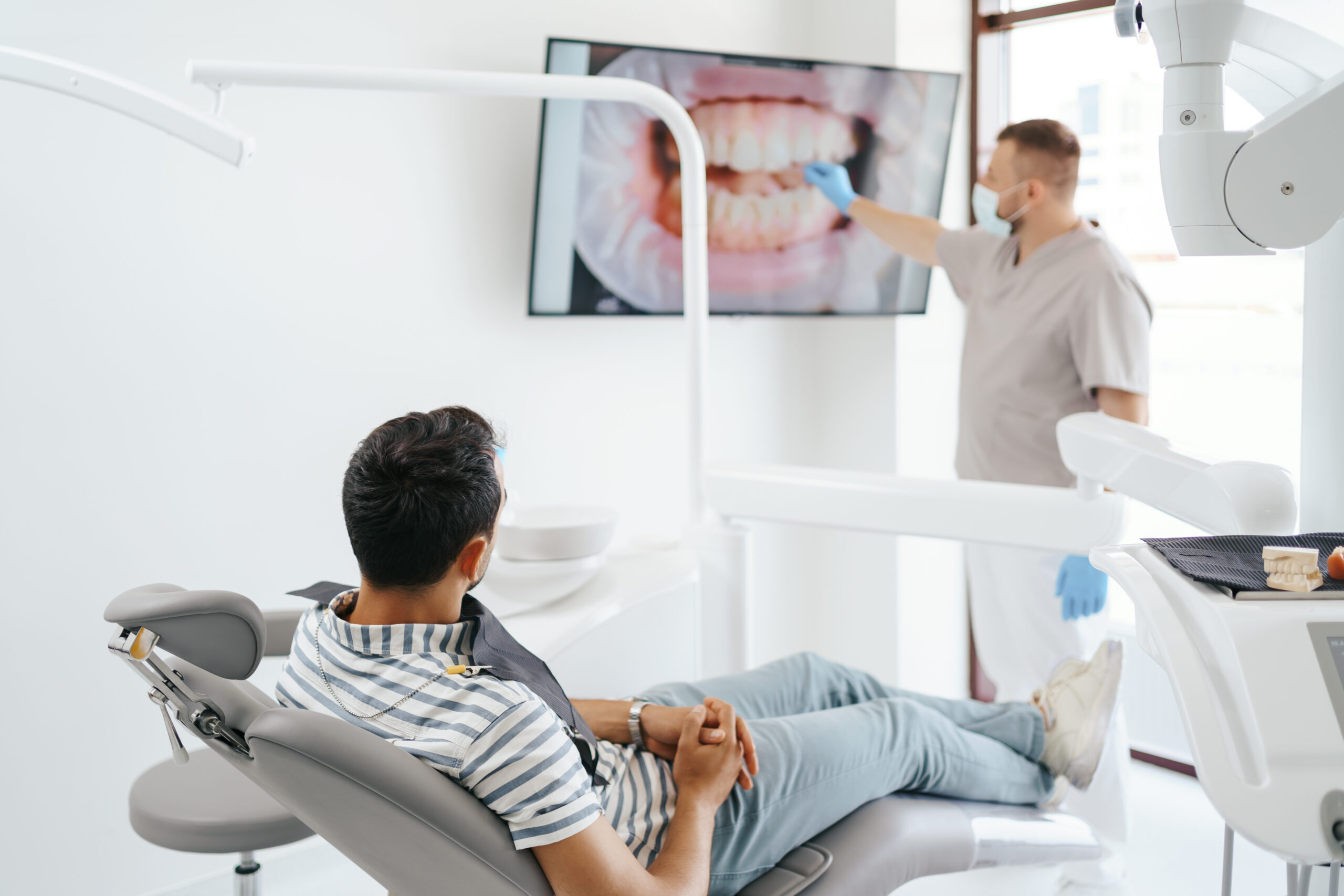
When you’re missing several teeth, everything changes: from what you can comfortably eat to how confidently you smile in photos or talk with friends. But it’s not a simple cosmetic issue. It affects daily routine, nutrition, speech, and overall quality of life, and those challenges tend to grow as more teeth are lost.
And it’s incredibly common. According to the CDC, 26% of adults aged 65 and older have eight or fewer natural teeth, which shows just how many people eventually need reliable tooth replacement options to stay healthy and independent.
In this guide, we’ll walk through how implants, bridges, and dentures compare so you can make the right choice for your needs, your goals, and your long-term comfort. Here’s what we’ll cover:
- What each temporary tooth replacement option can and can’t do
- Who makes a good candidate for dental implants, bridges, and dentures
- Differences in durability, comfort, maintenance, and cost
- A clear side-by-side comparison to help you evaluate your options
- Why so many NC patients trust Schein Dental for restorative care
Your Tooth Replacement Options
There are three main ways to replace missing teeth: dental implants, dental bridges, and dentures.
Each works differently, and each comes with its own strengths depending on how many teeth you’ve lost and the condition of your oral and dental health.
- Dental implants replace the entire tooth, including the root.
- Dental bridges rely on neighboring teeth for support.
- Dentures offer a removable solution for replacing multiple missing teeth.
Choosing between them usually comes down to a few key factors: how many teeth you’re replacing, the health of your jawbone, whether you prefer a surgical or non-surgical approach, your budget, and if you want a permanent solution.
Understanding these basics makes the next sections easier to compare as you think through what will work best for you long-term.
Dental Implants: The Most Advanced Option
Dental implants are widely considered the most advanced and long-lasting way to replace missing teeth.
Unlike other options that sit on top of the gums or rely on neighboring teeth for support, implants replace the entire tooth structure (root and all). This gives you stability that feels incredibly close to the real thing.
What Dental Implants Are
A dental implant is made up of three parts: a titanium post placed in the jawbone, an abutment that connects the post to the visible portion, and a custom crown that restores the appearance and function of your tooth.
Over time, the post fuses with the jawbone through a natural process called osseointegration. This bond is what gives implants their unmatched strength and stability.
Benefits of Implants
The benefits of dental implants go beyond filling a gap. Because implants function like real tooth roots, they help preserve the jawbone and prevent the bone loss that often follows tooth loss.
They also offer excellent chewing power, a natural appearance, and long-term durability, often lasting decades with routine dental care. And unlike removable options, implants don’t shift, slip, or require adhesives.
Downsides of Implants
Dental implants do require a surgical procedure, which means a longer treatment timeline and healing period. They typically cost more upfront than bridges or dentures, especially when multiple teeth need to be replaced.
Not everyone is a candidate for immediate placement, and some patients may need additional procedures such as bone grafting to support the implant placement.
Best Candidates
The best candidates for implants generally have healthy gums, good jawbone density, and no medical conditions that interfere with healing.
Nonsmokers or those willing to stop smoking often see the best long-term outcomes. Implants are ideal for patients looking for a stable, permanent replacement that looks and functions as close to natural teeth as possible.
Dental Bridges: A Trusted Traditional Solution
Dental bridges have been used for decades to replace missing teeth, offering a reliable, non-surgical way to restore your smile.
They’re especially helpful when a small gap interrupts your bite or when the teeth on either side of the space are strong enough to support a restoration.
What a Bridge Is
A dental bridge works by using the healthy teeth next to the gap as anchors. Those teeth are fitted with crowns, and a false tooth, called a pontic, is attached between them to fill the space.
Traditional bridges are the most common, but variations exist. Cantilever bridges use only one supporting tooth, while Maryland bridges rely on a bonded metal or porcelain framework instead of full dental crowns.
Benefits
Bridges offer a quick, effective way to replace a missing tooth without surgery. Most patients can complete treatment in just a couple of appointments, and the final result blends naturally with the rest of the smile.
Bridges restore chewing ability, prevent nearby teeth from shifting, and provide a stable, fixed solution that doesn’t need to be removed.
Limitations
Because bridges depend on neighboring teeth for support, those teeth must be reshaped and permanently altered to hold the crowns, even if they’re healthy.
Bridges also do not replace the tooth root or stimulate the jawbone, which means bone loss can still occur in the space beneath the missing tooth. With time, gum tissues changes or wear may require replacement, typically every 7–10 years.
Ideal Candidates
A dental bridge is a strong option for patients who have healthy teeth on either side of the gap, prefer a faster non-surgical solution, or want a more affordable alternative to implants.
Bridges work best when only one or two teeth are missing and when long-term bone preservation isn’t a main concern.
Dentures: Affordable and Flexible
Dentures remain a dependable option for people who need to replace several or all missing teeth at once.
Modern designs are far more comfortable, natural-looking, and adaptable than older versions, giving patients a range of choices based on budget, health, and lifestyle.
Types of Dentures
Dentures come in a few main forms. Full dentures replace all the teeth in an upper or lower arch, resting on the gums for support. Removable partial dentures fill in multiple missing teeth while preserving remaining teeth, using clasps or a lightweight metal framework for stability.
For added security, implant-supported dentures attach to small implants in the jawbone, reducing movement and improving chewing power.
Benefits
One of the biggest advantages of dentures is their affordability, especially for patients missing many teeth. They can be made relatively quickly, often in a matter of weeks, and they don’t require surgery.
Dentures restore facial shape, help improve speech, and allow patients to eat more comfortably than they could with significant tooth loss. When designed well, they can also look remarkably natural.
Limitations
Although dentures have improved, they still come with certain challenges. They may shift during eating or speaking, particularly lower dentures, which rely on less surface area for suction. Some patients experience sore spots or need time to adjust to the fit.
Because dentures rest on the gums instead of integrating with the bone, they don’t prevent the bone loss that occurs after teeth are removed. Over time, this can change the shape of the mouth and require relines or replacements.
Best Candidates
Dentures are a good solution for patients who are missing many or all of their teeth, want a budget-friendly option, or have medical conditions that make surgery inappropriate.
They can also serve as an interim solution before transitioning to implants later on. Many patients appreciate their flexibility and relatively quick turnaround.
Side-by-Side Comparison: Implants vs. Bridges vs. Dentures
Choosing the right tooth replacement option becomes much easier when you can see how each one stacks up.
Here’s a clear comparison of dental implants, bridges, and dentures across the factors patients ask about most.
| Category | Dental Implants | Dental Bridges | Dentures |
| Longevity | Longest-lasting option; often 20+ years or a lifetime with proper care | Typically 7–10 years before replacement | 5–8 years on average; may need periodic relines |
| Function & Comfort | Feels and functions like natural teeth; extremely stable | Fixed in place; comfortable but depends on supporting teeth | Removable; may slip during eating or speaking |
| Aesthetic Outcome | Most natural-looking; crown emerges from gumline | Natural appearance; may show changes if gums recede | Looks natural when well-made; aesthetics vary by fit/material |
| Cost | Highest upfront investment; strong long-term value | Mid-range cost | Most affordable upfront |
| Bone Preservation | Prevents bone loss by stimulating the jawbone | Does not prevent bone loss | Does not prevent bone loss |
| Maintenance | Brush and floss like natural teeth | Requires special flossing under the bridge | Daily removal and cleaning; may need adhesives |
| Best for… | Single teeth, multiple teeth, or full arch when bone is healthy | Small gaps with strong adjacent teeth | Multiple or full-arch tooth loss; budget-friendly or non-surgical needs |
Which Tooth Replacement Is Best for You?
There’s no single “best” tooth replacement option for everyone. The right choice depends on your oral health, your budget, and what you want your smile to feel like years from now.
Dental implants appeal to many patients because they’re stable, long-lasting, and help protect the jawbone. But they also require surgery and a higher upfront investment, which isn’t the right fit for every situation.
Bridges work well when you’re replacing just one or two teeth and the surrounding teeth are healthy enough to support crowns. They offer a quicker, non-surgical path to restoring your bite and appearance.
Dentures remain a strong option for patients with more widespread tooth loss, or for those who prefer a removable, affordable solution.
If you’re comparing, consider how long you want the restoration to last, how comfortable you are with surgery, what your bone health looks like, and how important chewing power and stability are in your daily life. A conversation with your dentist can help clarify your priorities and point you toward the option that will serve you best long-term.
Finding the Right Fit for Your Smile
Choosing how to replace missing teeth is a big decision, and the right option should support your long-term comfort, confidence, and health, not just fill a space. Whether you’re drawn to the stability of implants, the practicality of a bridge, or the flexibility of dentures, the best choice is the one that fits your needs and your lifestyle.
At Schein Dental, we take a thoughtful, collaborative approach to restorative care. Our team walks you through every option, explains what to expect, and helps you build a plan that feels right for you.
The goal is simple: a strong, comfortable smile that lets you live the way you want.
If you’re ready to take the next step, we’re here to help. Schedule a tooth replacement consultation and explore the solutions that make the most sense for your smile and your future. Reach out now!